

I started the Pacific Crest Trail in the middle of a heat wave.
It was March.
Back in Kelowna, British Columbia, Canada, where I lived, there was still snow on the ground and the temperature was below freezing. A few hours later, I was in San Diego, walking out of an airport into heat that felt completely wrong for the time of year.
I took a shuttle east to Campo, toward the southern terminus.
By the time I reached the monument, late in the afternoon, I felt dehydrated before I had even taken my first real step. My body had no idea what to make of it yet. I was nowhere near acclimatized.
My permit was for that day, so I walked the 0.8 miles to CLEEF campground and spent the night there. The next morning I waited until 9 a.m. for the officials to arrive, validate my permit and give me the coveted PCT hangtag.
Then I started walking.
The first five miles were easy enough.
Mostly fuelled by the excitement of finally being out here.
And then it became midday.
The excitement wasn’t enough.
There was no shade.
None.
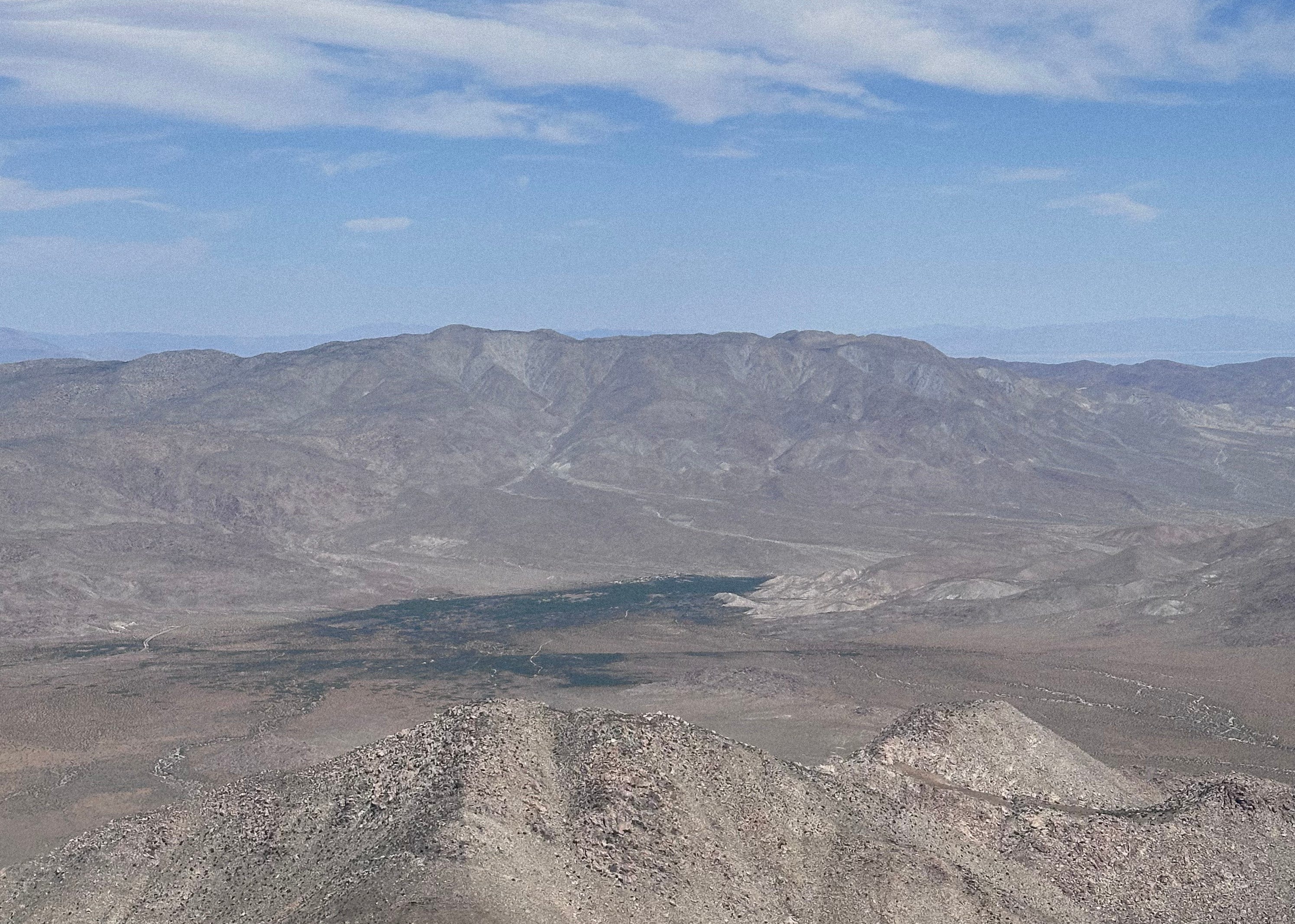
The trail ran through a landscape that seemed specifically designed to punish you for being outside in the middle of the day. It felt like an oven. Heat radiated off the ground, hot air surrounded me from every direction, and the sun beat directly down on my dome. It was relentless.
A few of us eventually resorted to pressing our faces into rattlesnake-infested bushes just to get out of the sun. Winchester, Honey Badger and Wonder Woman were with me.
It was Winchester who gave me my trail name: Code Talker. It quickly became Code.
We waited until five in the afternoon. And then we started walking again.
By mile 11.5, we were in rough shape. Almost out of water, with the next source still miles away.
Another hiker, Michael, gave us a litre of his water, which Wonder Woman and I shared.
It was enough to get me through the night.
Michael and I hiked together from there.
I learned my first lesson of the desert quickly.
You don’t hike through the middle of the day.
You wake up early. You get as many miles as you can while it is cool. Then you find shade, stop moving, and wait for the worst of the heat to pass.
The trail had been going for two days and had already taught me that I was not in charge.
I was going to have to listen.
I had come out here for two reasons.
The first was simple. I wanted to get my body moving again.
The second was less tangible. I wanted to meet people. As many as I could. I wanted to spend the next few months surrounded by genuinely interesting people from all over the world.
But first, I had to learn the trail.
The heat wave made an already difficult beginning even harder. Long stretches without reliable water meant carrying enormous amounts of it, which meant carrying more weight, which meant walking slower, which boiled down to spending more time exposed to the heat.
For some people, it was simply too much.
Even Winchester and Honey Badger, both PCT veterans, quit during that first week.
But somehow, in the middle of all that difficulty, our little group started to take shape.
There was Michael, Poppins, Count Andy, Zapper and Loopy, who would join us for stretches but often hike ahead on his own.
We didn’t always hike together. People would get up at different times, spread out, pair up with others for a few hours, or head off on their own for a while.
One day, it was just Michael, Poppins and me walking along the crest of a mountain.
Michael was in front.
I was behind him, with Poppins bringing up the rear.
The trail disappeared behind a bush. Michael put his hiking pole down, expecting to feel the ground on the other side.
Instead, he felt something different.
A large rattlesnake.
He leapt forward.
I leapt backward, straight toward Poppins.
The snake started rattling.
It didn’t stop.
For the next twenty minutes, it sounded like a jet engine coming from somewhere inside the bushes.
We couldn’t see it anymore, but we couldn’t cross the trail either. There was no alternative route around that section.
So we waited.
Eventually, the snake moved just far enough for us to make our way past.
And somewhere between the leap, the rattling and the twenty-minute standoff, Michael became Rattlesnake Poker. RP for short.
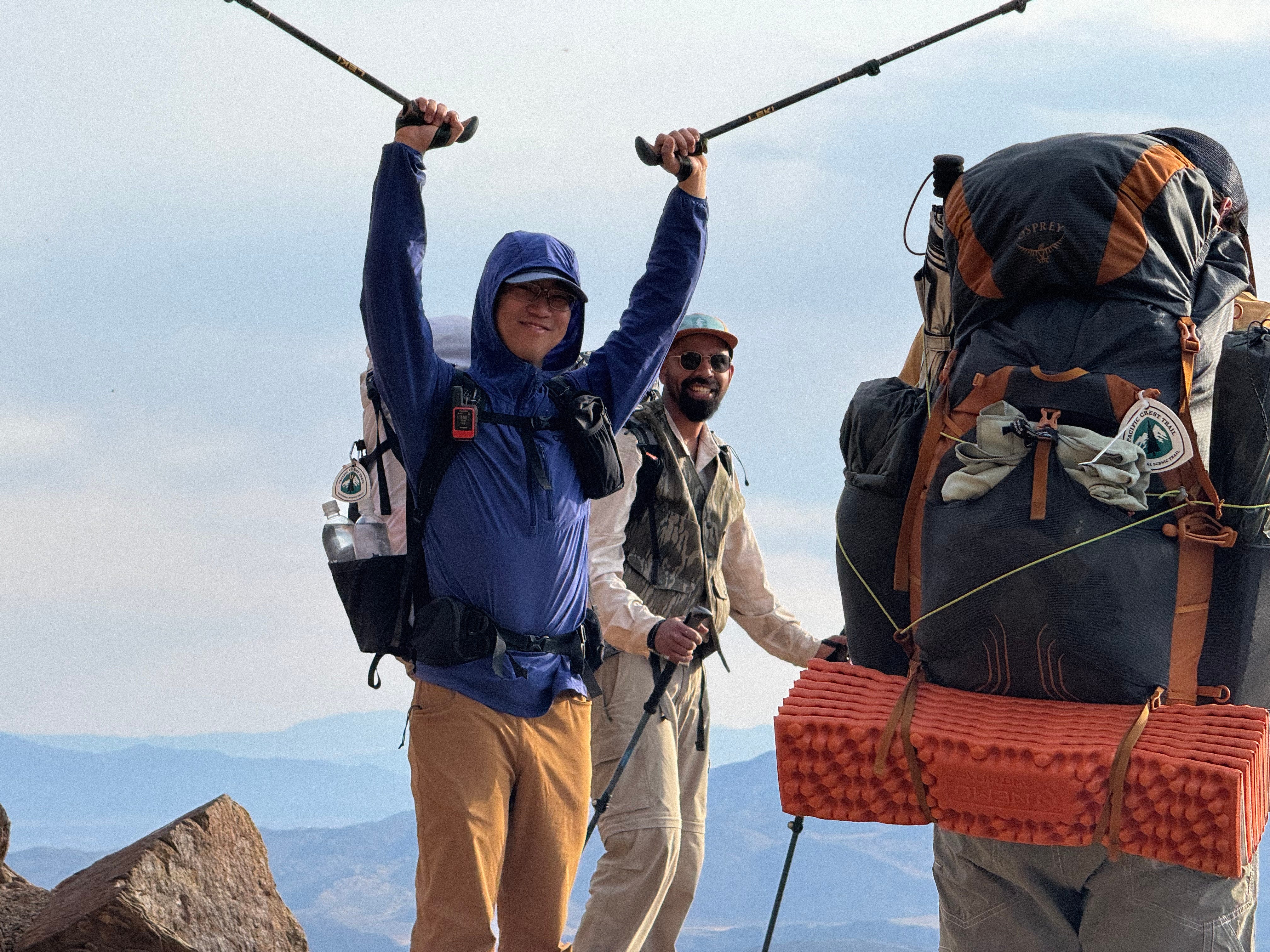
By the time we reached Julian, my little group was starting to feel like a family. A trail family. A tramily.
We had our first zero day here. We washed ourselves. We washed our clothes. We washed the desert off everything we owned.
And then we ate the famous free pie.
We had been thinking about it, talking about it and, at some point, even singing about it for the last few days.
There was something about being in a real town again that made us realize how strange the previous few days had been.
We had spent days covered in dirt and sweat, talking while walking, eating whatever was convenient and falling asleep almost immediately after putting our shelters up.
Now we were sitting around town in clothes that smelled like detergent, looking almost like normal people.
We were also starting to discover the little things that made each of us who we were.
Poppins, for example, carried a pack of cards everywhere.
Every time we had even a few minutes to spare, the cards would come out.
He would try to rope us into playing some Midwestern card game none of us had ever heard of. Euchre was his favourite. None of us really knew what we were doing at first, but Poppins was persistent.
And then, somehow, Euchre became the default game of the tramily.
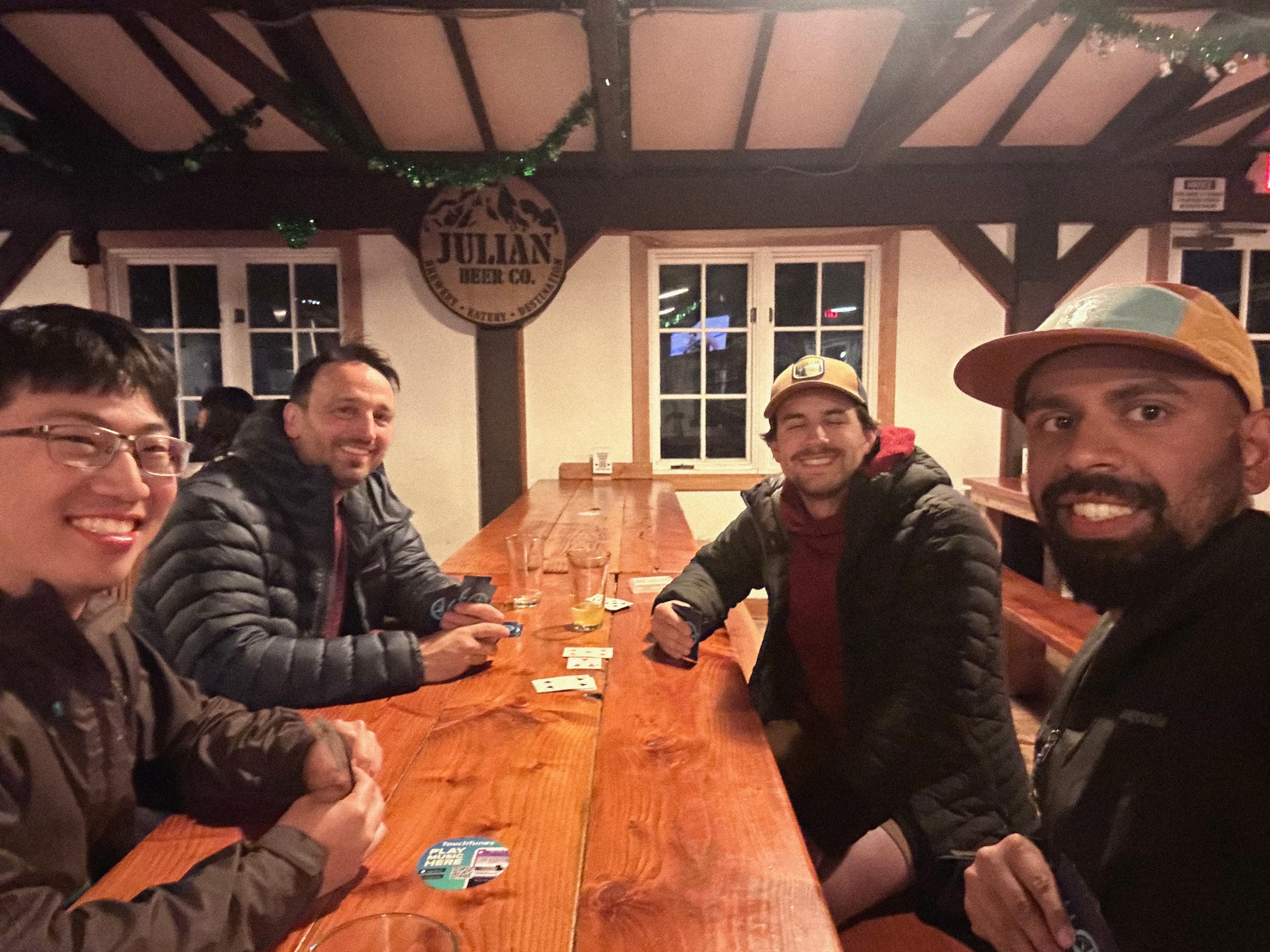
It came out whenever we had time to kill. At town stops. While waiting for someone. Sometimes when we should probably have been doing something else.
It wasn’t one big moment where we suddenly became friends.
It was the cards coming out.
The same jokes getting repeated.
Waiting for someone who was slower.
Sharing food.
And eventually knowing who would say what before they said it — “Cactus!!!”
While we were settling into the trail mentally, our bodies were adapting to it physically.
The blisters dried up. The skin hardened. Feet that had been soft and unaccustomed to the trail began to change. Shoulders developed their own armour where the pack straps rubbed against them.
Eventually, those changes became something we were almost proud of.
They were our battle scars.
We compared them. We joked about them. We pointed out new ones as if they were badges of honour.
They were physical proof that we were becoming thru-hikers.
I was settling into the rhythm of trail life and didn’t want to break it. So when my tramily decided to stay in Julian for an additional day, I left.
On the way to Warner Springs, I crossed the 100-mile marker.
It should have felt like a milestone.
Instead, it felt strangely empty.
My tramily wasn’t with me.
Somewhere along those miles, I had a quiet realization: the PCT wasn’t really about the miles. It was about the people you shared them with.
So when I reached Warner Springs, I decided to wait. I spent three nights in Warner Springs, and it became one of those unexpected places that stays with you.
There was a church nearby that was hosting an Easter breakfast for PCT hikers.
Word spread quickly.
Then it spread a little too quickly.
What was probably meant to be a small gathering for a handful of tired hikers turned into something much bigger. PCT hikers started timing their arrival into town around the brunch.
By the night before, there were tents everywhere.
Forty hikers became fifty. Fifty became sixty. And then, my tramily arrived too.
People we’d never met were arriving from the trail, setting up their shelters and settling in for the night, all for the promise of a big breakfast in the morning.
And the next morning, there was.
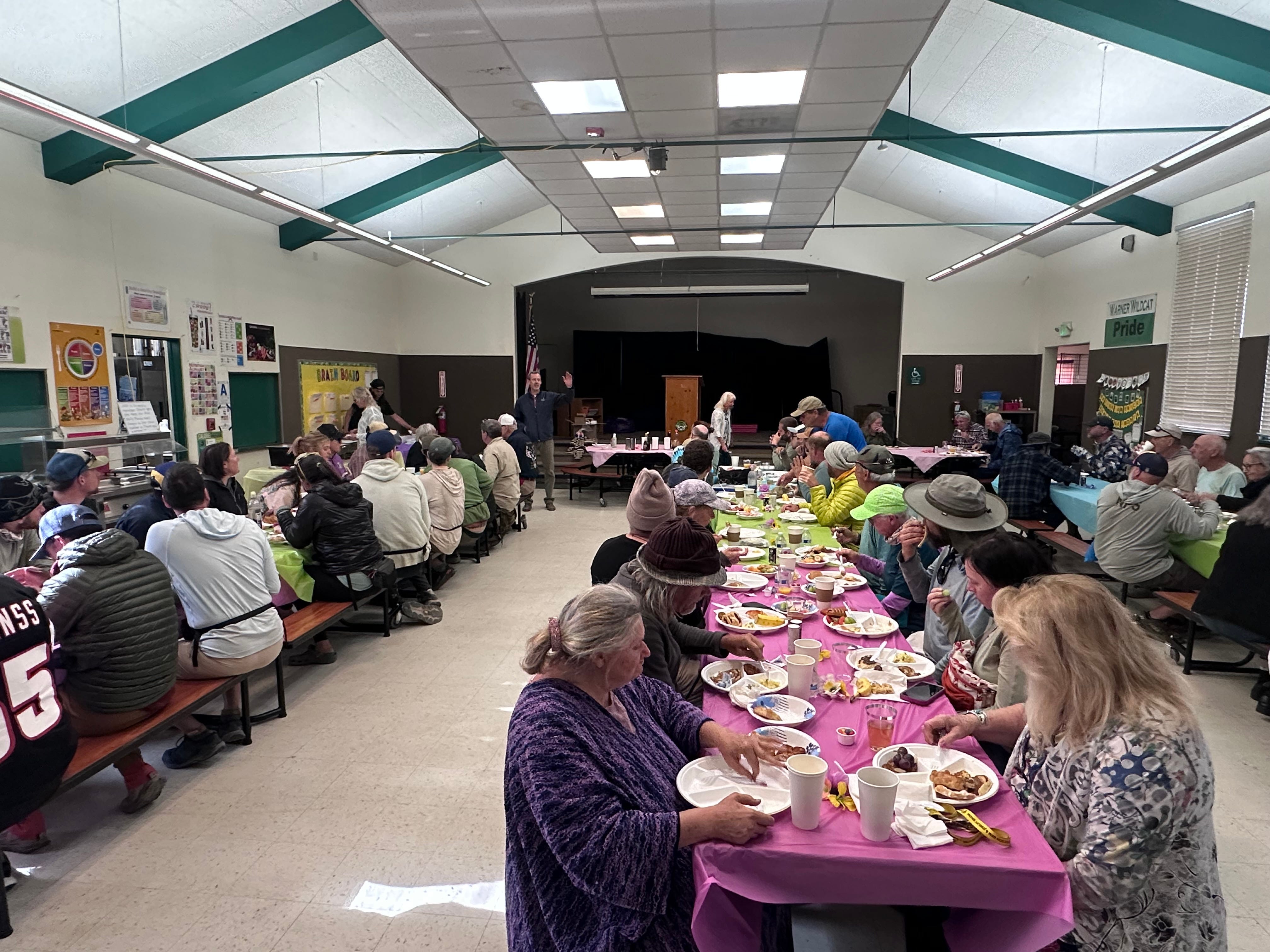
A church full of people who had nothing to do with the trail had opened its doors to a bunch of dirty, sunburnt strangers walking from Mexico to Canada.
There was food everywhere.
People kept bringing more.
They wanted to feed us. They wanted to hear our stories. They wanted to know where we had come from and where we were going.
There was no transaction.
They were simply happy to have us there.
I had expected the trail to be hard.
I hadn’t expected so many people along the way to make it easier.
The days had begun to blur into a sequence of small, predictable things. Wake up. Pack everything back into my backpack. Walk. Eat. Filter water. Walk some more. Find somewhere to sleep.
There was something comforting about how little I had to think about. I didn’t have to plan much beyond the next few hours. The trail decided what mattered, and most of the time, it came down to three simple questions:
How far can I walk today?
Where is the next water?
Where will I sleep tonight?
The life I had left behind was becoming strangely distant.
I wasn’t thinking about work.
I wasn’t thinking about what I should be doing.
I wasn’t thinking about the next milestone.
For the first time in years, my life had been reduced to a few simple but consequential questions.
Eventually, we reached Pioneer Valley Cafe, one of those legendary PCT stops that hikers seem to talk about long before they reach it.
By then, RP’s feet were taking a beating.
He had switched to zero-drop shoes without giving his feet any time to adjust. The trail was not particularly interested in giving him that adjustment period either.
He couldn’t keep going.
So he hitched to Idyllwild to take a few days off and let his feet recover.
The rest of us continued on, expecting to catch up with him in Idyllwild and have him rejoin us.
We arrived in Idyllwild just before a snowstorm, and Zapper graciously invited all of us to stay with him.
Now, here is something you have to know about Zapper. He had been doing trail magic for years, and almost every PCT story he told seemed to begin with, “When I was doing trail magic at Walker Pass…”
This year, he was doing double duty.
He was a hiker himself, but he was also a trail angel for our tramily.
His wife drove all the way into town to pick us up and take us home. RP, who was recovering at a motel in town, joined us too.
We showed up as a small, filthy group of hikers and took over their house like we’d known them for years.
Zapper and his wife fed us.
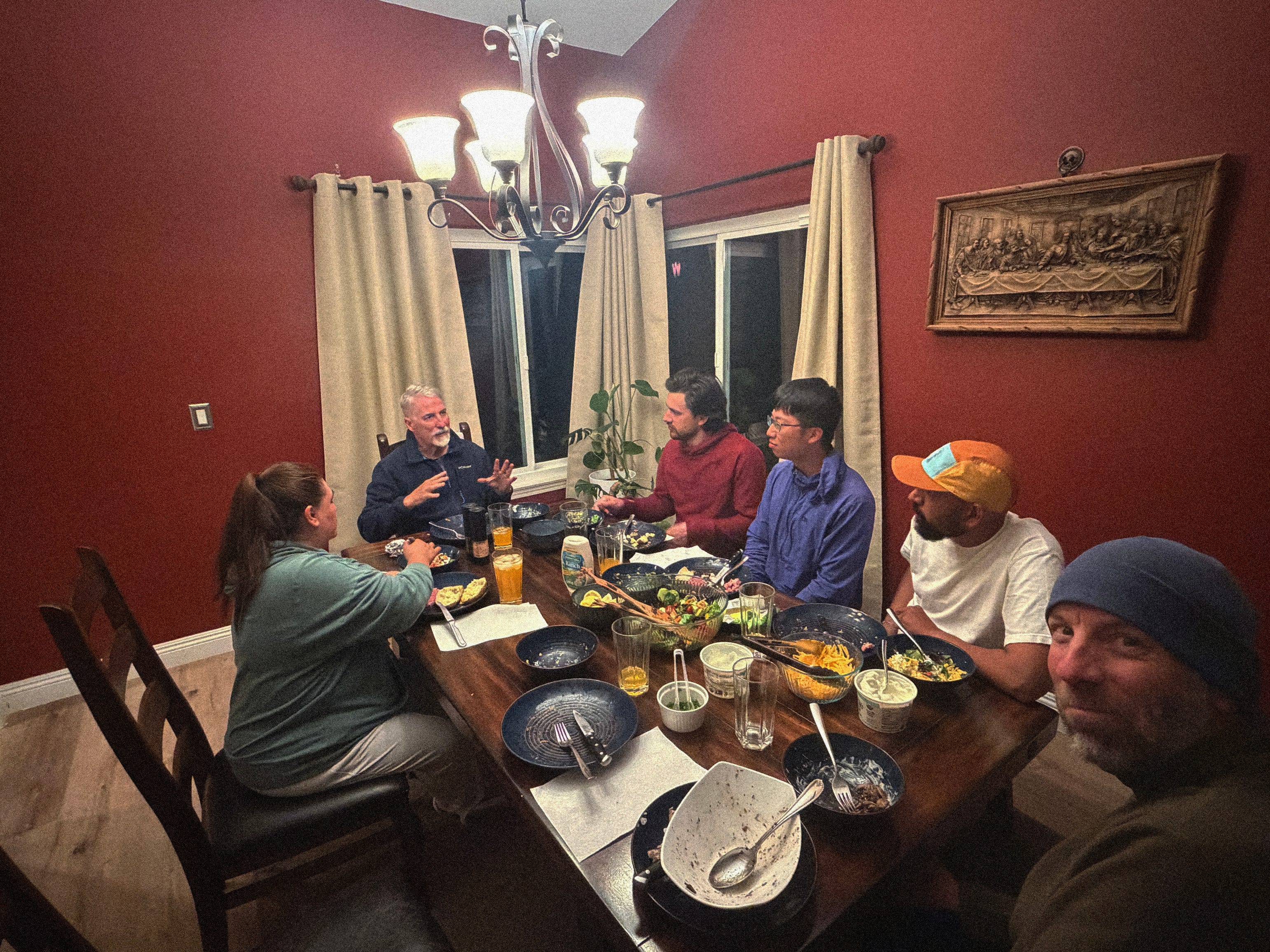
And then there was the lemon pie.
Zapper had made it himself, and it was incredible.
One of the first things we did was put our packs on a scale.
Zapper gave each of us a large tote for the things we were willing to leave behind, and slowly, our carefully chosen gear started making its way into it.
Everything we had carried from Campo suddenly had to justify its existence.
Did I really need this?
Was it worth carrying every single day for the next five months?
An ounce wasn’t precise enough anymore. On Loopy’s expert recommendation, we switched to grams.
So things went into the tote.
And then more things went into the tote.
By the end of it, all of us had left something behind.
Count Andy was having none of it.
While the rest of us were cutting weight, mostly at the cost of comfort, Andy was carrying a huge two-person tent that was practically palatial.
He had three inflatable pillows.
One for his head.
One for between his knees.
And one for between his ankles.
His backpack was the size of a tower.
This was how Andy hiked.
It was also how he got his trail name: Count Andy.
So when Zapper drove us to REI, nobody was particularly surprised when Andy somehow found more things he needed.
He almost emptied the store.
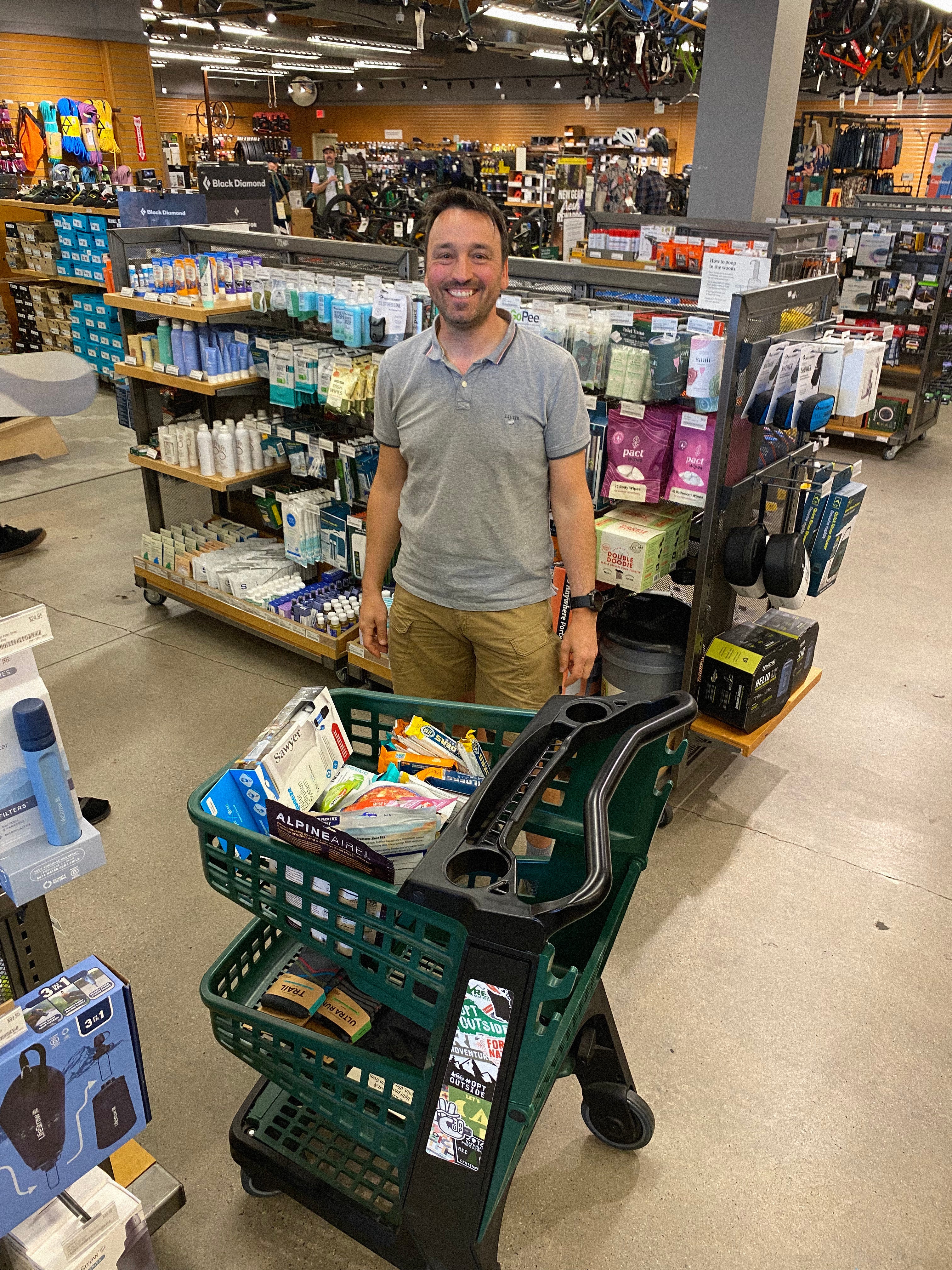
His already enormous backpack somehow got even bigger.
We went back to Zapper’s, repacked everything, put our packs back on the scale, and tried to convince ourselves we’d somehow made them lighter.
The funny thing was that the longer we walked, the less attached we became to the things we carried.
At Campo, every item had seemed important.
A few hundred miles later, we were happy to throw half of it into a tote.
Out on trail, every extra ounce had a price.
And you paid that price with every step.
Then we heard the storm had passed. It was time to put our bodies to work again.
For RP, the break had come as a blessing in disguise.
His feet were recovering.
He was ready to get back on the trail.
There was just one problem.
We’d all spoken highly of the section between Pioneer Valley Cafe and Idyllwild, and he didn’t want to miss it either.
So while the rest of us resumed from Idyllwild, RP went back to Pioneer Valley Cafe to hike the section he’d missed.
It was only a few days.
But on the PCT, a few days is a long time.
Once a gap opens up between hikers, it becomes surprisingly difficult to close it. Your hiking partners keep moving. You keep moving. Everyone develops a new rhythm.
We left assuming we’d see him again within a week. We had no idea that months would pass before we were all together again.
For the rest of us, the landscape had changed.
There was still snow on the ground.
That night was extremely cold.
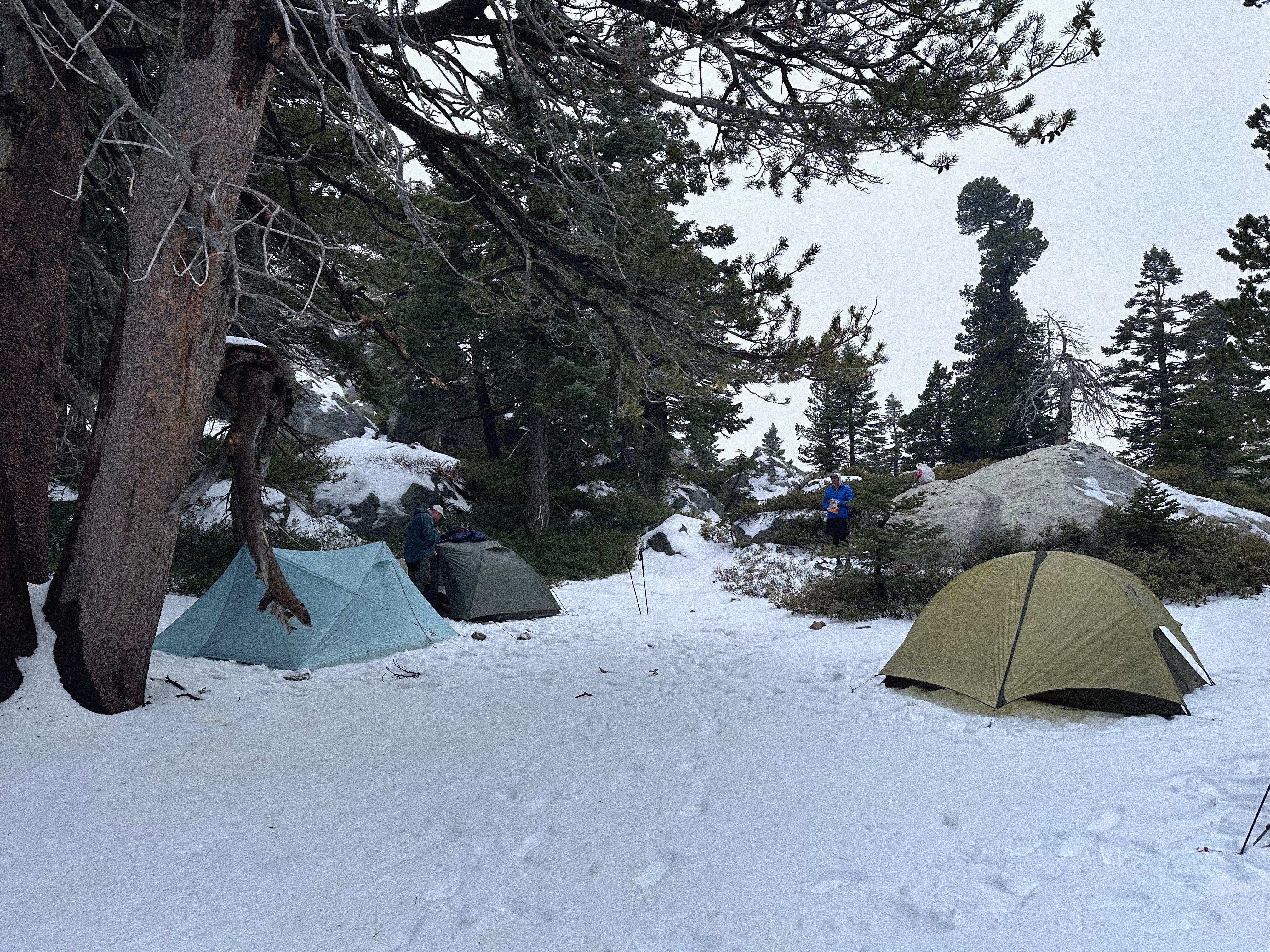
Andy, who has Raynaud’s syndrome, was having a particularly rough time. His fingers and toes were turning blue from the cold. He was clearly struggling, but he pushed through it.
The next morning we had a decision to make.
Do we summit San Jacinto?
Most of the group decided against it. We could come back another time, perhaps another year when the conditions were better.
But I wanted to go.
There was still snow on the ground, but I felt comfortable enough in those conditions to give it a shot.
I brought it up with the tramily.
Poppins had clearly been having the same internal debate.
The moment I said I wanted to go, he said he would go too.
And that was that.
We would do it as an out and back, then catch up with the rest of the group in a day or two.
It was a lot of elevation gain over a relatively short distance, so we took our time.
As we got higher, the snow stayed with us.
Since camping at the summit isn’t allowed, we eventually decided to leave behind everything we didn’t need and take only the essentials. We put the rest in a bear hang and continued with lighter packs.
The weather started to clear as the day went on.
Clouds gave way to blue sky.
And then, almost suddenly, the landscape opened up.
From the top, we could see for miles.
The desert stretched out below us. Mountains continued in every direction. The weather that had made the morning feel uncertain had given way to one of the clearest views we’d had since Campo.
I stood there for a while, taking it in.
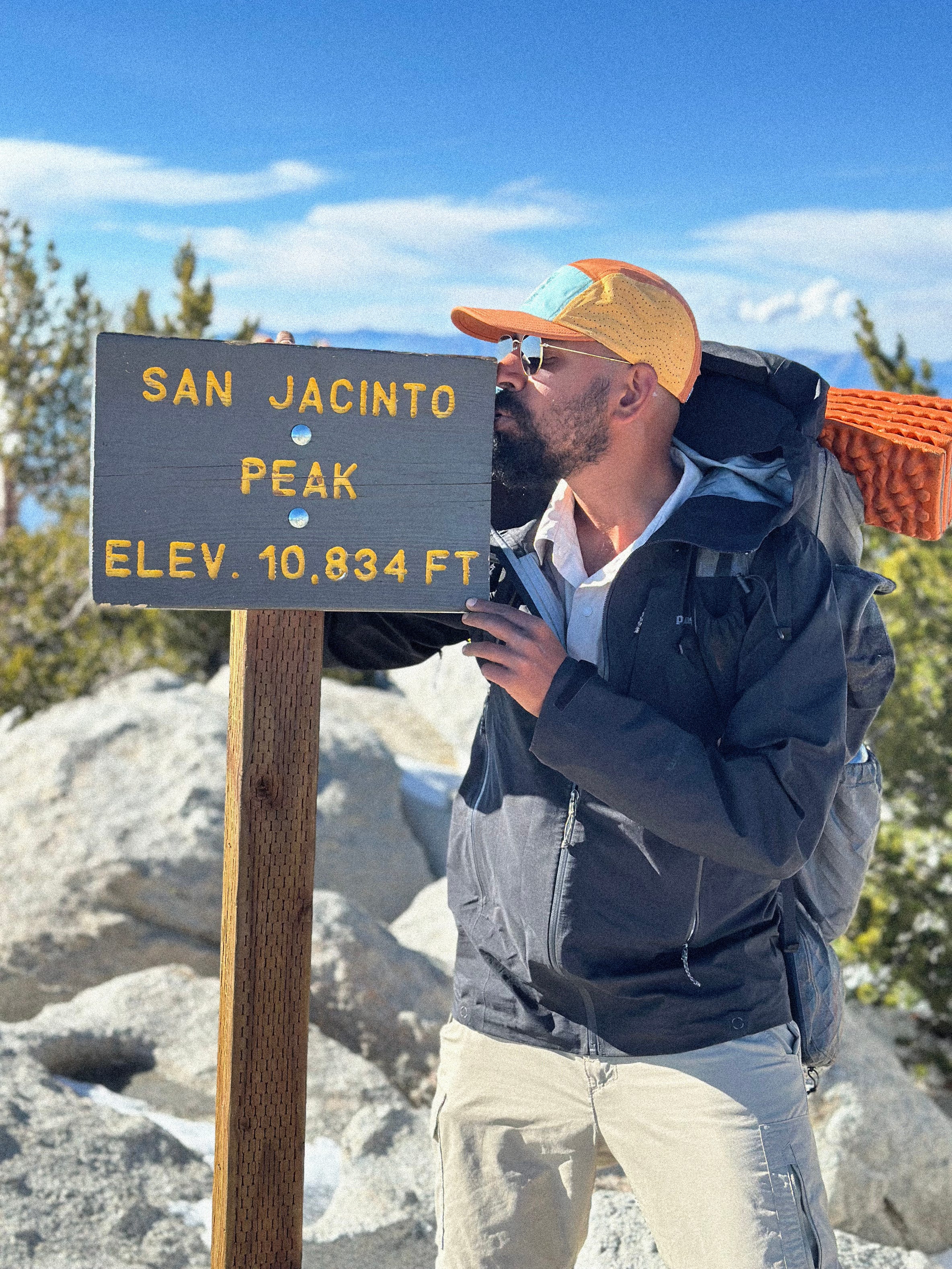
10,834 feet was a personal best for me. But there was still a very long way to go.
For that moment, though, there was nowhere else I wanted to be.